
Cast Study
A new hotel only product.
An 18% uplift in package conversion.
We created an entirely new hotel only product, opening loveholidays to a new market while driving an 18% uplift in package conversion.
Overview
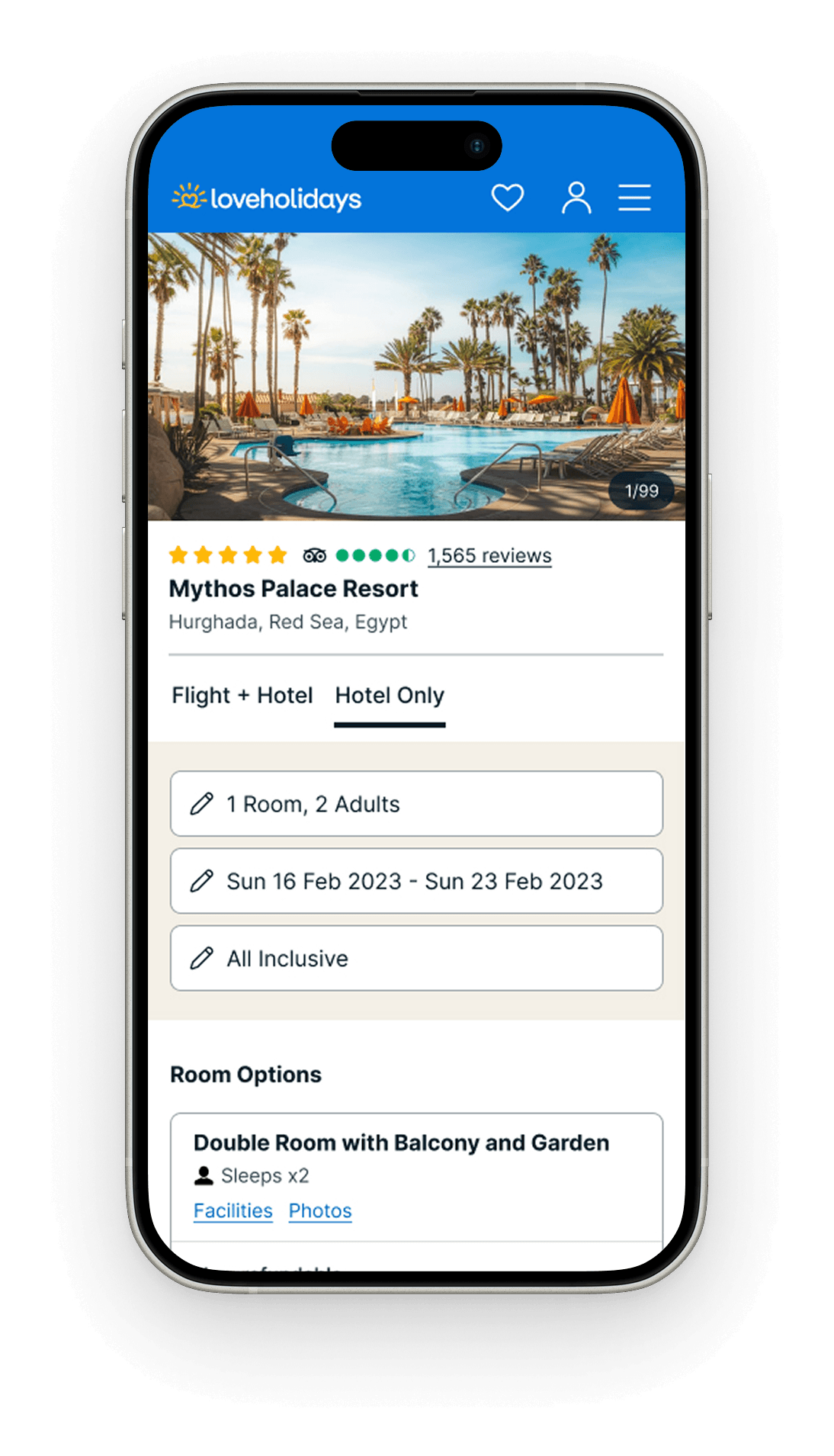
loveholidays had built its experience around package holidays. We saw an opportunity to help customers who wanted to book accommodation without flights.
Rather than commit to building a new product based on assumptions, we tested the proposition early, learned what customers needed and used those insights to shape the experience. The outcome was a massive 18% increase in package holidays (flight plus hotel)
My Contributions
User research
UI & UX design
CRO
Analytics
Strategy
Team
1 x Co founder
1 x Developer
1 x Designer
Time
2 Months for phase 1
3 Months for phase 2
From zero to trivagos 3rd largest UK Partner in 5 months
Result
The outcome was a massive 18% increase in package holidays (flight plus hotel)
Expanding beyond package holidays
A hotel only product gave us access to a large group of customers we weren’t currently serving. Beyond the immediate opportunity, it also created a new source of traffic that we could potentially cross sell into higher value package holidays by adding flights to their hotel booking.
Assess the market potential
Hotel-Only Product
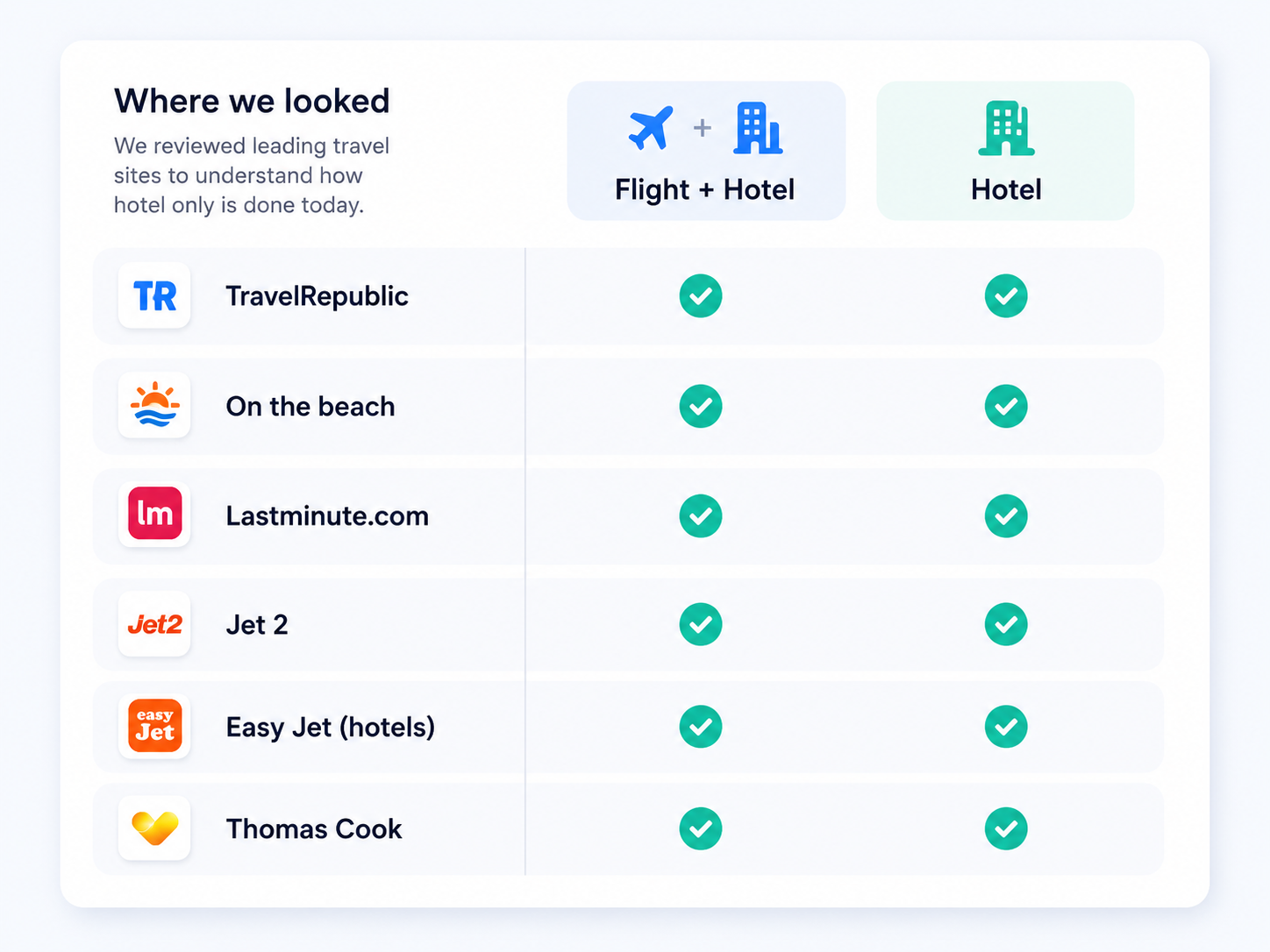
While this was a common feature among OTAs, we first needed to assess the market potential before committing to a full product build. Given our strong performance in holiday packages and an already packed roadmap, we focused on a low-effort MVP to test demand. First step was to assess the market by looking at how man of competitors offered a hotel only product.
MVP STRATEGY
A Streamlined Market Entry
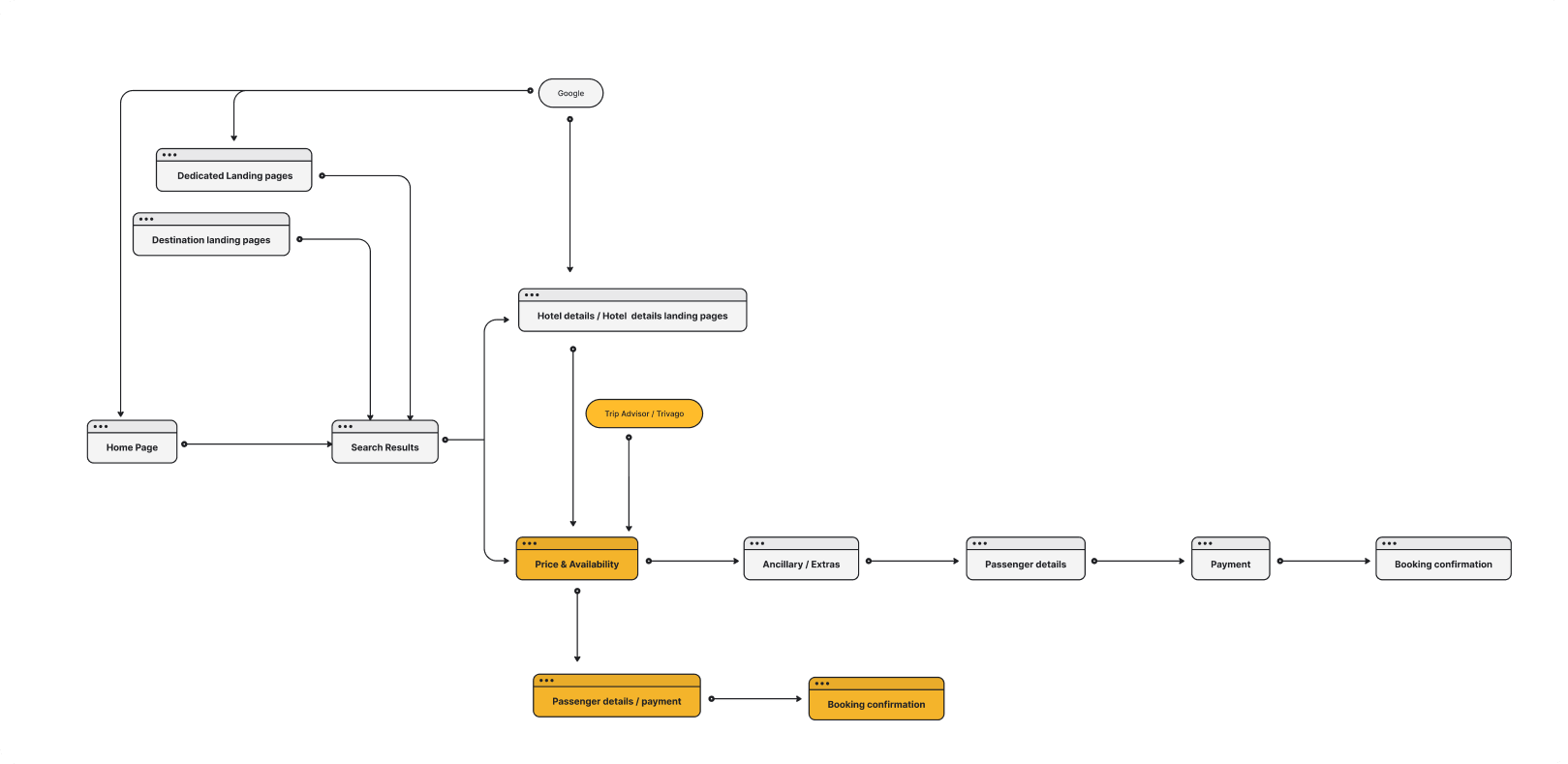
To enter the hotel only market quickly and efficiently, we defined a minimum viable product (MVP) flow that allowed users to book accommodation seamlessly without disrupting our core package holiday experience or cluttering our existing site architecture.
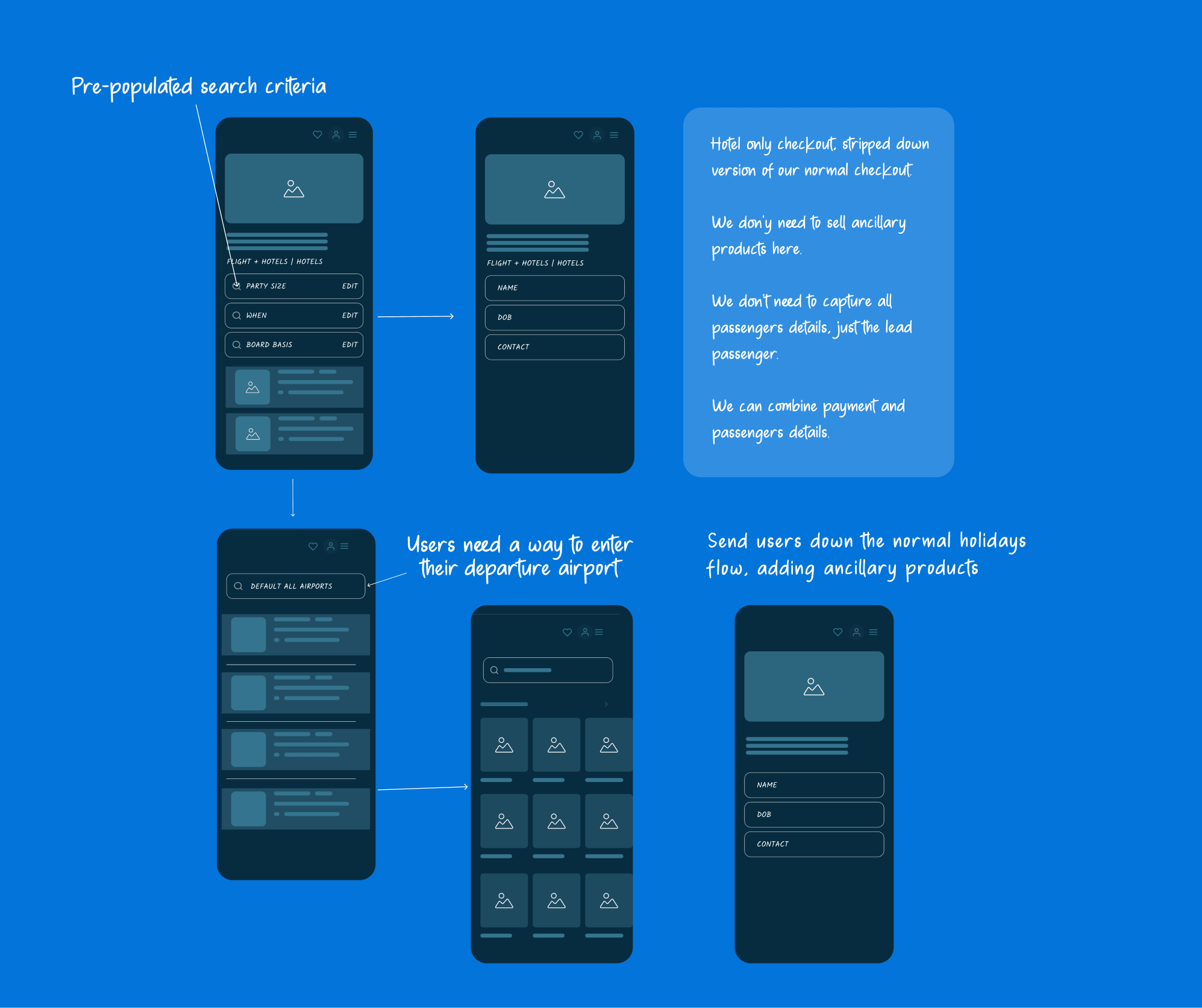
Rather than devoting significant engineering resources to building a standalone search engine and dedicated checkout flow from scratch, we took a targeted, cost effective approach. As shown in the yellow path in the diagram, we leveraged high intent traffic from major metasearch channels, such as Trivago and TripAdvisor, routing users directly to our existing Price & Availability page. This strategic shortcut allowed us to validate market demand, capture high converting users, and gather crucial behavioral insights with minimal initial development effort before committing to a full product rollout.
Why this journey made sense for the MVP
Building hotel search into loveholidays would have required significant changes to our existing search technology. But customers arriving from metasearch sites such as Trivago and Tripadvisor had already chosen their hotel, dates, occupancy and all the required criteria to create an offer.
This gave us a way to test the hotel only proposition without heavy lifting of building a search feature first. Customers could land directly on the hotel, check prices and availability, and book without adding a flight.
This concept would dramatically reduced the scope of a hotel only product and remain true to our MVP approach, while still allowing us to test real customer demand.
Pros
Faster to market
We could launch and learn sooner.
Lower development effort
We avoided rebuilding our search experience for hotel only.
Test real demand
We could measure behaviour with real customers and bookings.
Existing journey
Much of the package booking experience could be reused.
Trade offs
No hotel search
Customers couldn’t search for hotels directly on loveholidays.
Limited discovery
Customers couldn’t easily explore alternative hotels.
Dependent on metasearch
The MVP relied on customers discovering their hotel elsewhere first.
MVP flow for phase 1
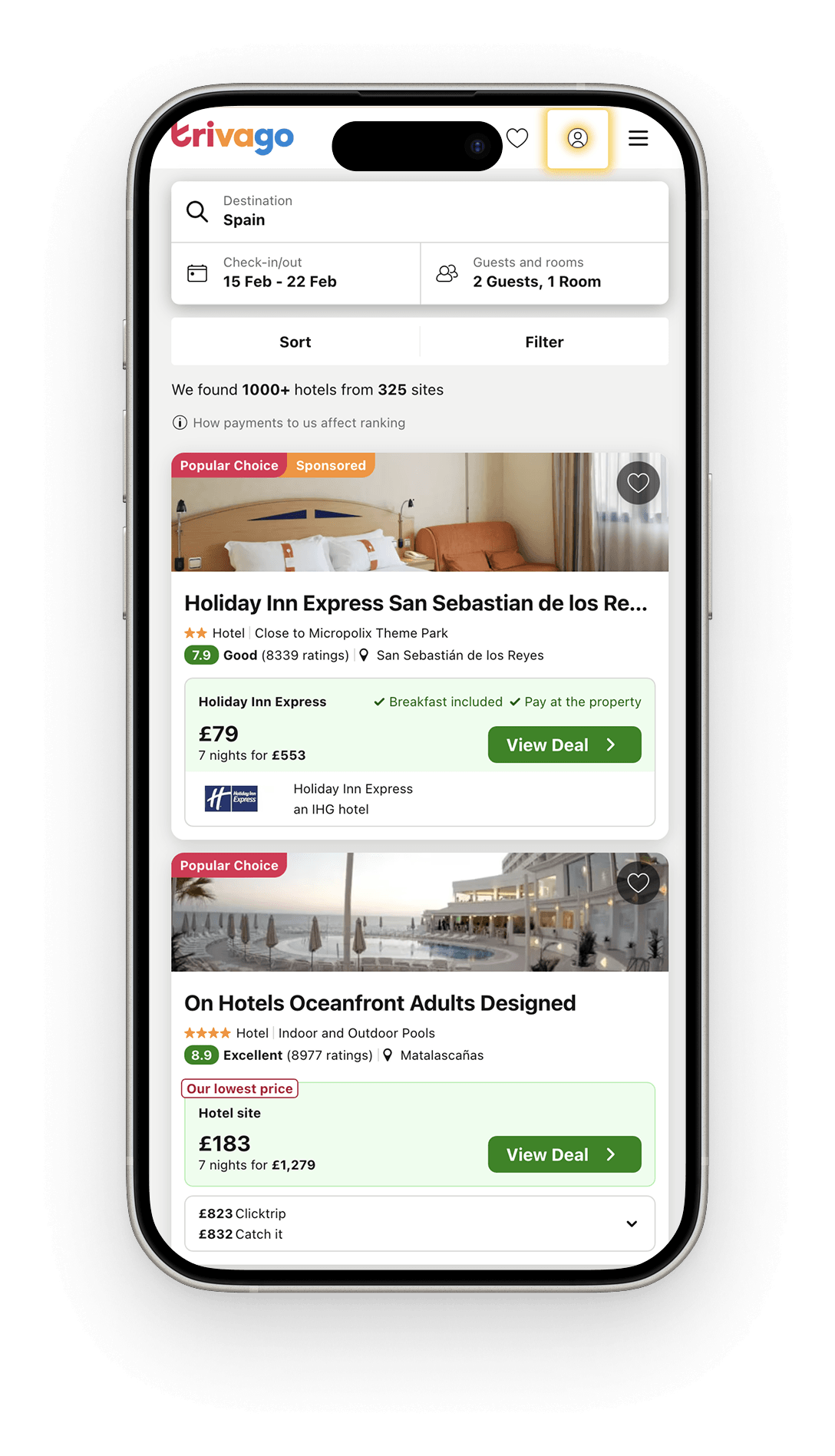
1. Search with a partner
Customers search for a hotel through one of our metasearch partners.
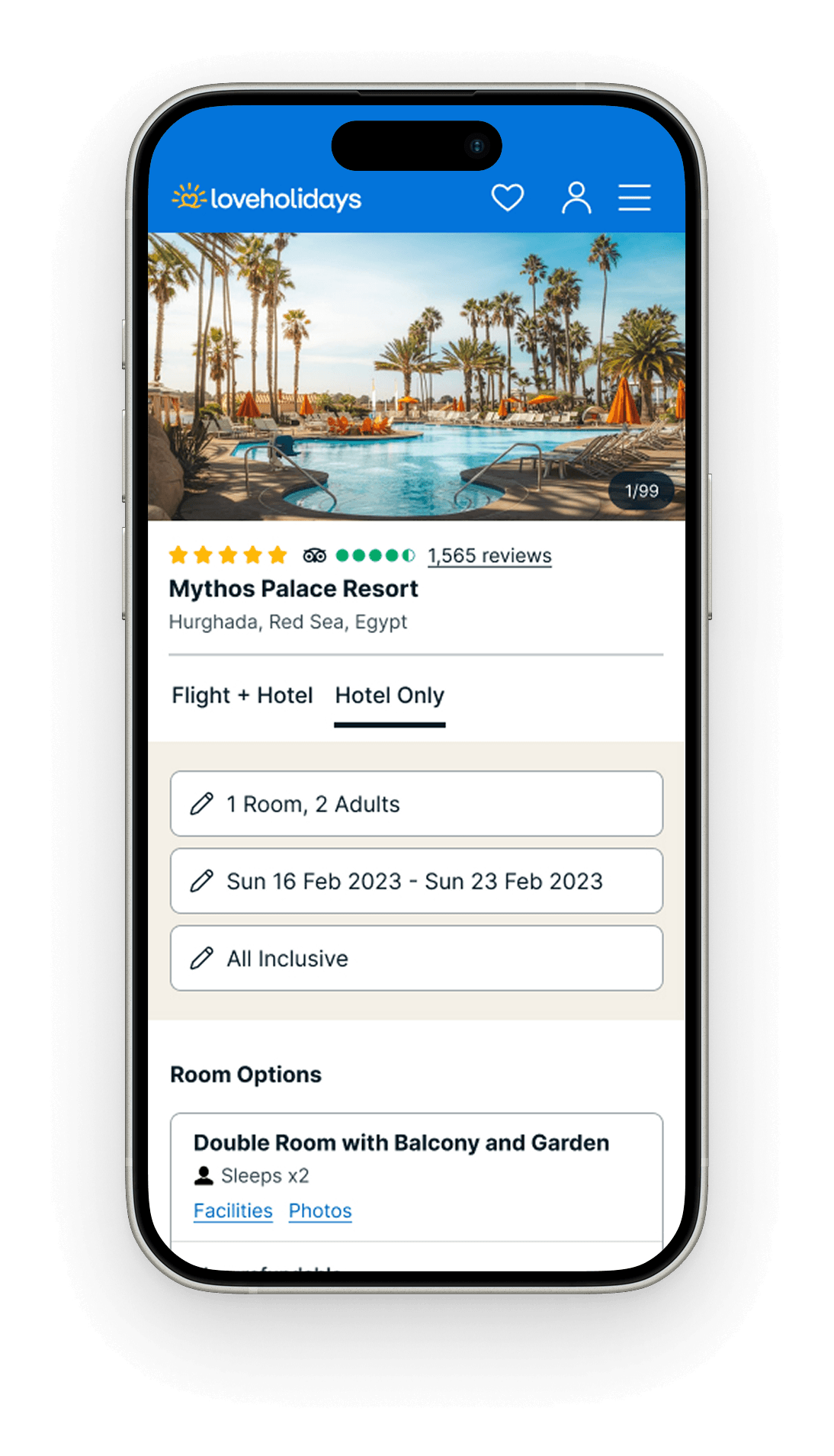
2. Continue on loveholidays
Once they find a hotel, they’re taken to loveholidays to review the offer.
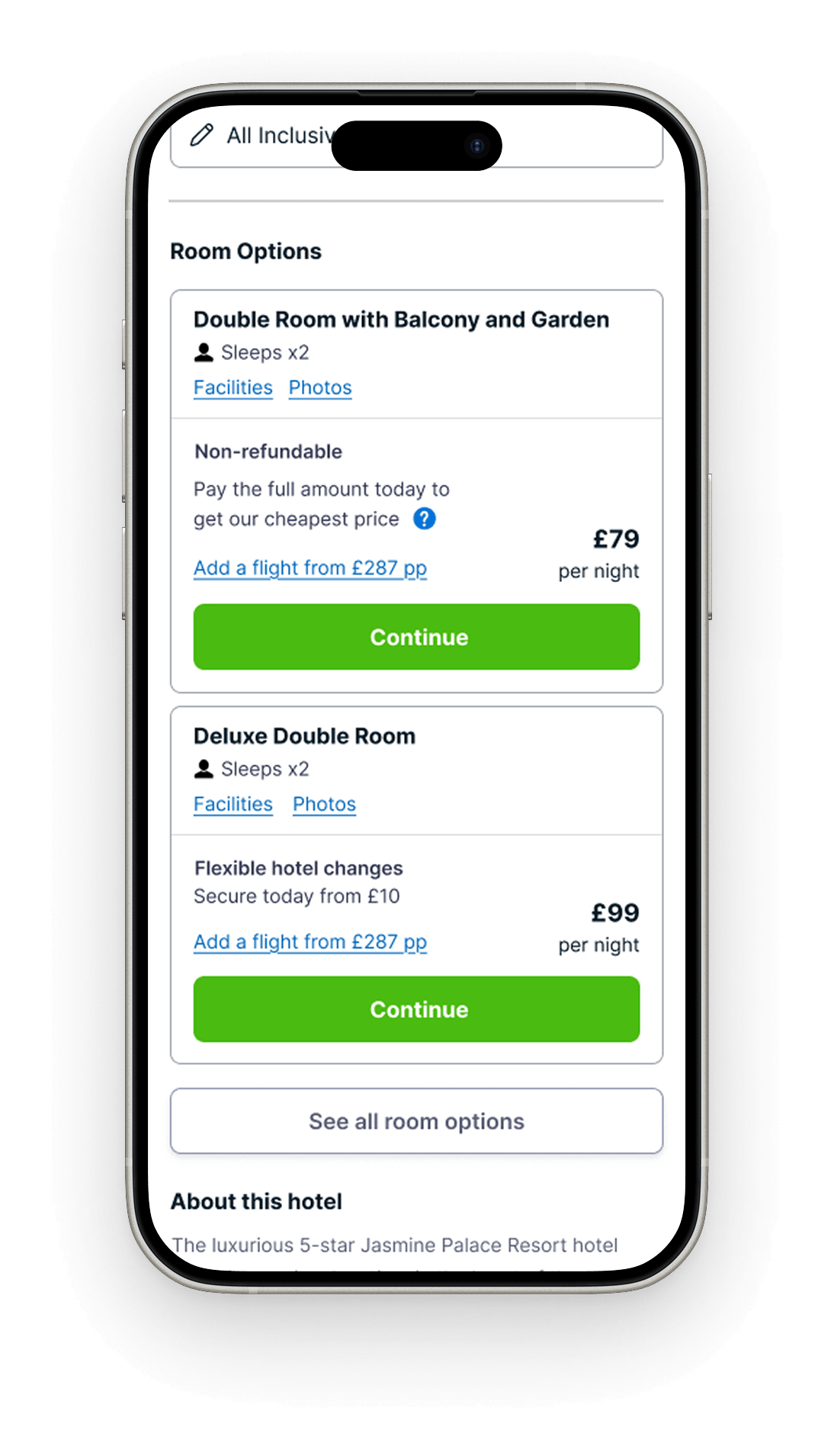
3. Choose a room
Customers can compare room options and choose the one that works for them.
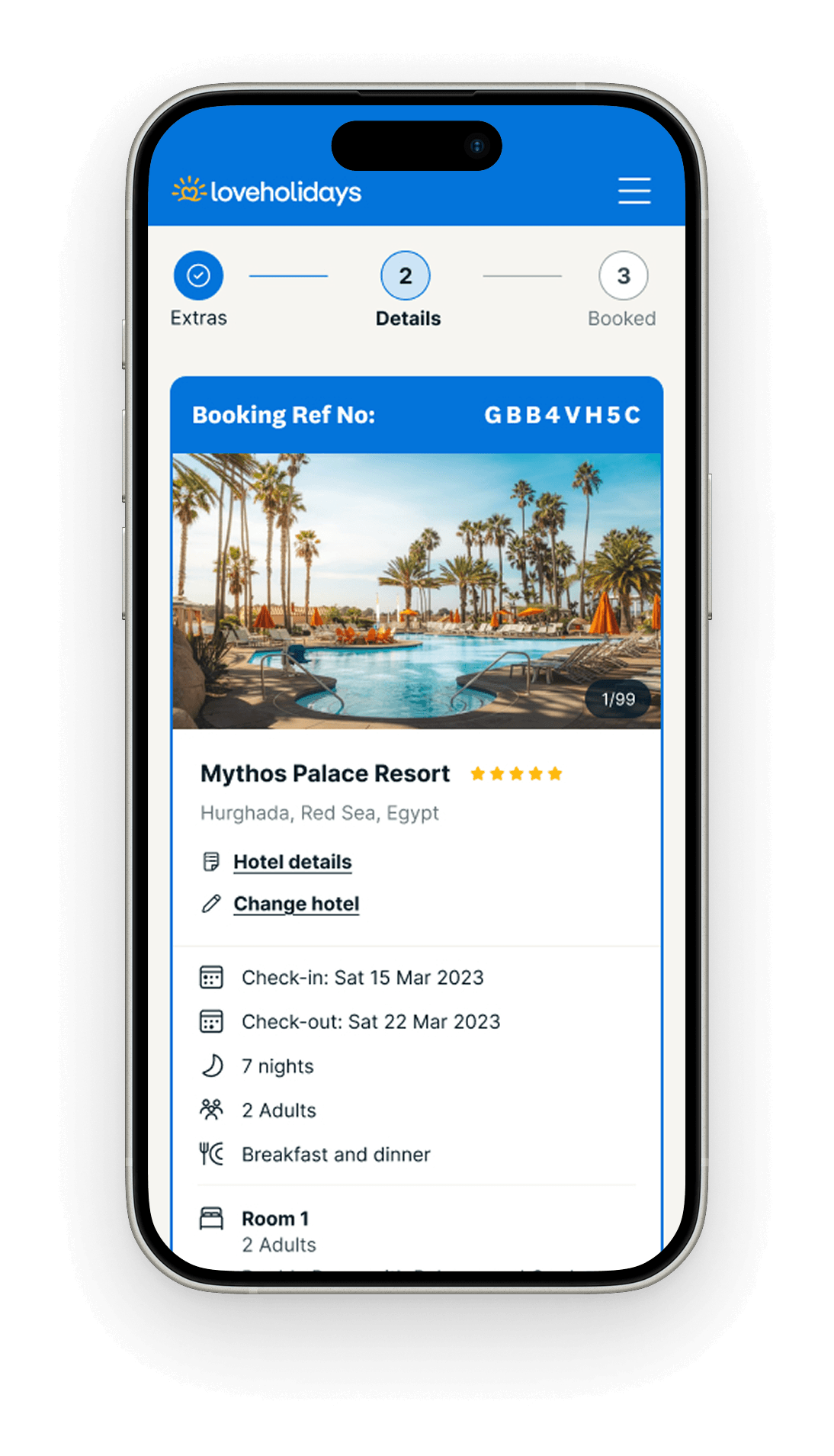
4. Complete the booking
Customers complete their booking on loveholidays, bringing them into the customer lifecycle.
DESIGN CHALLENGE
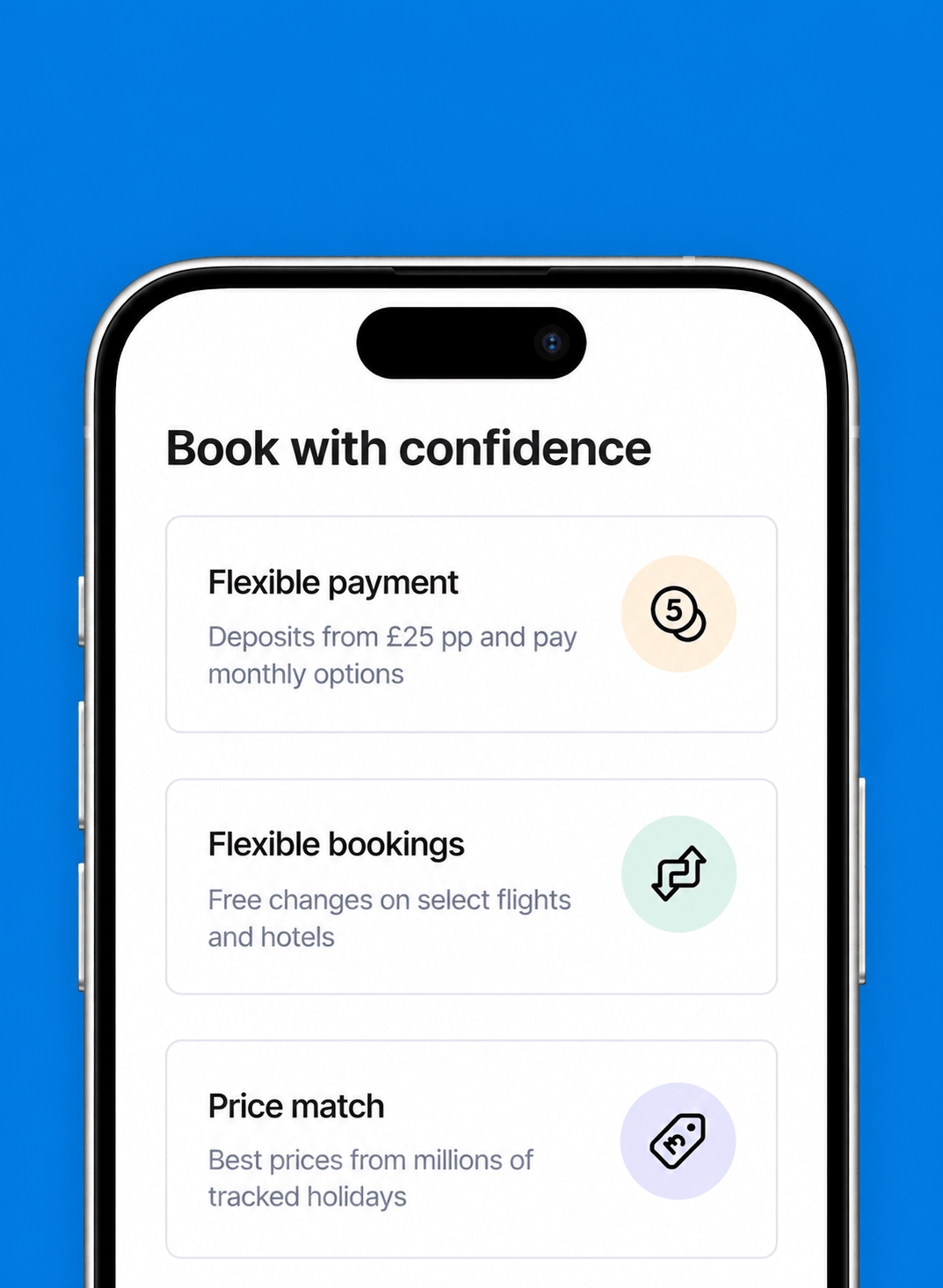
Building trust with a new audience
Hotel only customers could arrive at loveholidays from a third party site with little or no familiarity with the brand. Before asking them to book, we needed to establish trust and remove the concerns that could prevent them from completing their purchase.
We identified five areas that mattered most:
- Clear, transparent pricing
- Secure payments
- Confidence their booking would be fulfilled
- Support if something went wrong
- Accurate hotel information and imagery
MVP VALIDATION
Validating Demand
Our initial MVP gained immediate traction, averaging 30 bookings per day. This gave us the confidence to expand the product and test the opportunity further.
- Added hotel search, allowing customers to browse and switch hotels.
- Ran A/B tests to understand the impact on package bookings and identify any cannibalisation.
Key finding
Customers were more likely to move from hotel only to a package holiday than the other way around, supporting our hypothesis that hotel only could become a new acquisition route into the core package product.
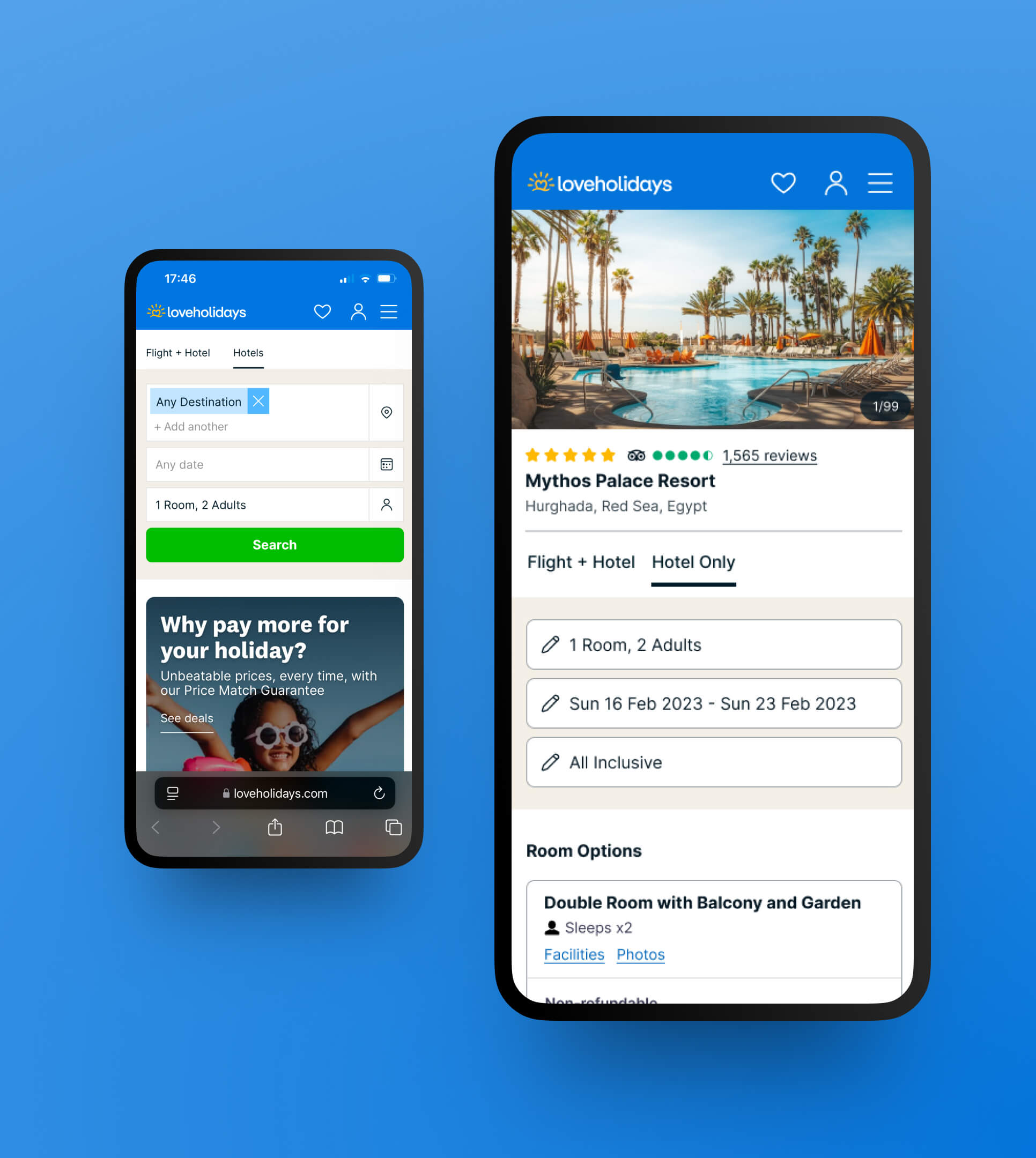
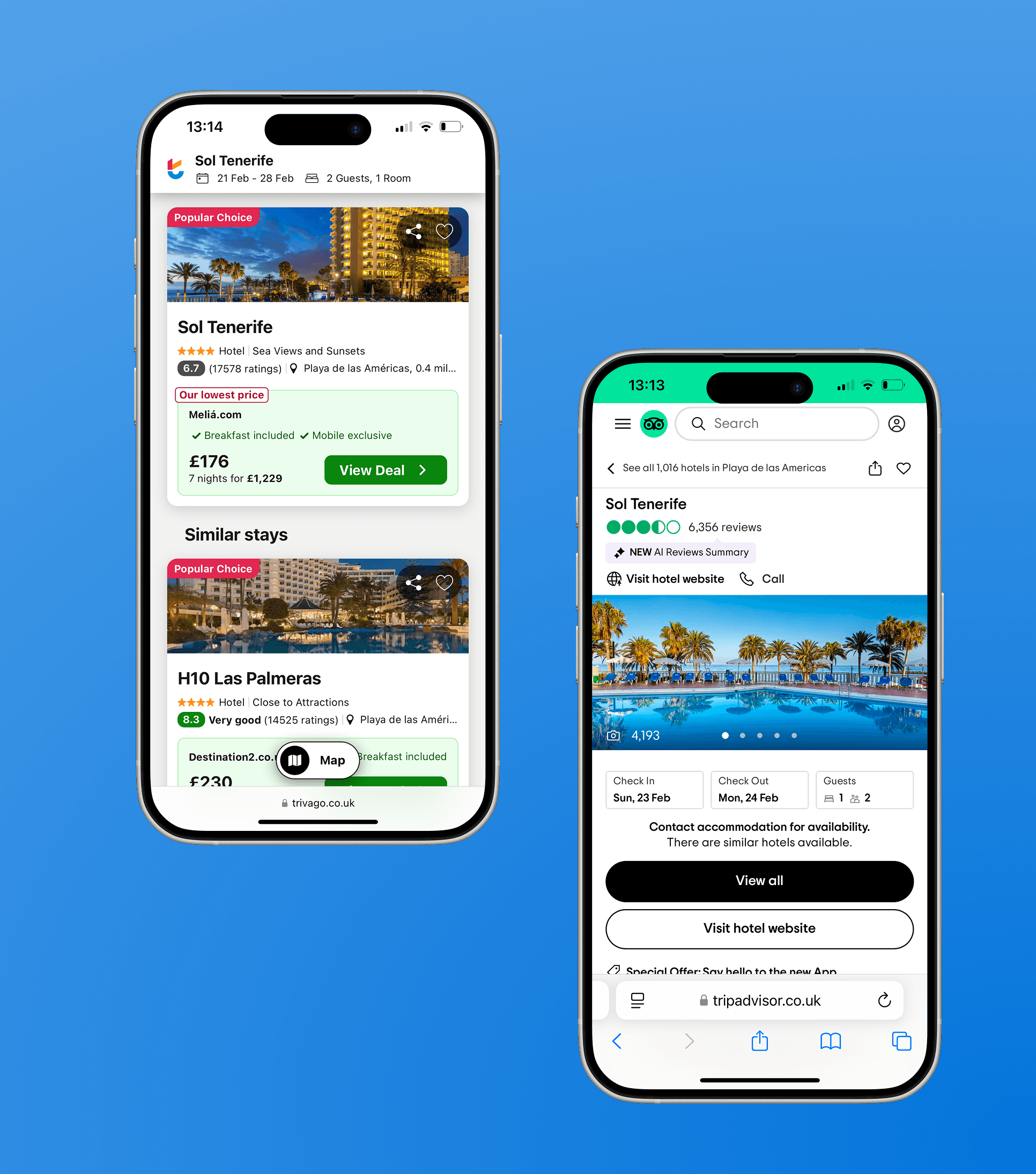
Screenshot from Triavgo & Tripadvisor
ITERATION & LEARNING.
Continual Optimisation
As the product gained traction, we continued to refine the experience based on customer behaviour and performance data.
We aligned our pricing with each metasearch partner, preventing unexpected price changes when customers arrived on loveholidays.
We also matched hotel imagery with the originating site, creating continuity and reassuring customers they had landed on the right hotel.
Finally, we introduced opportunities to add a flight and build a package, while helping customers discover similar hotels.
PRICING STRATEGY
Improving Competitiveness
The MVP had proven there was demand, but we weren’t capturing as much metasearch traffic as we could.
Our hotel prices often appeared lower in search rankings than competitors, limiting our visibility and the volume of customers reaching loveholidays.
The challenge was to make hotel only pricing more competitive without reducing the margins of our core package holiday product.
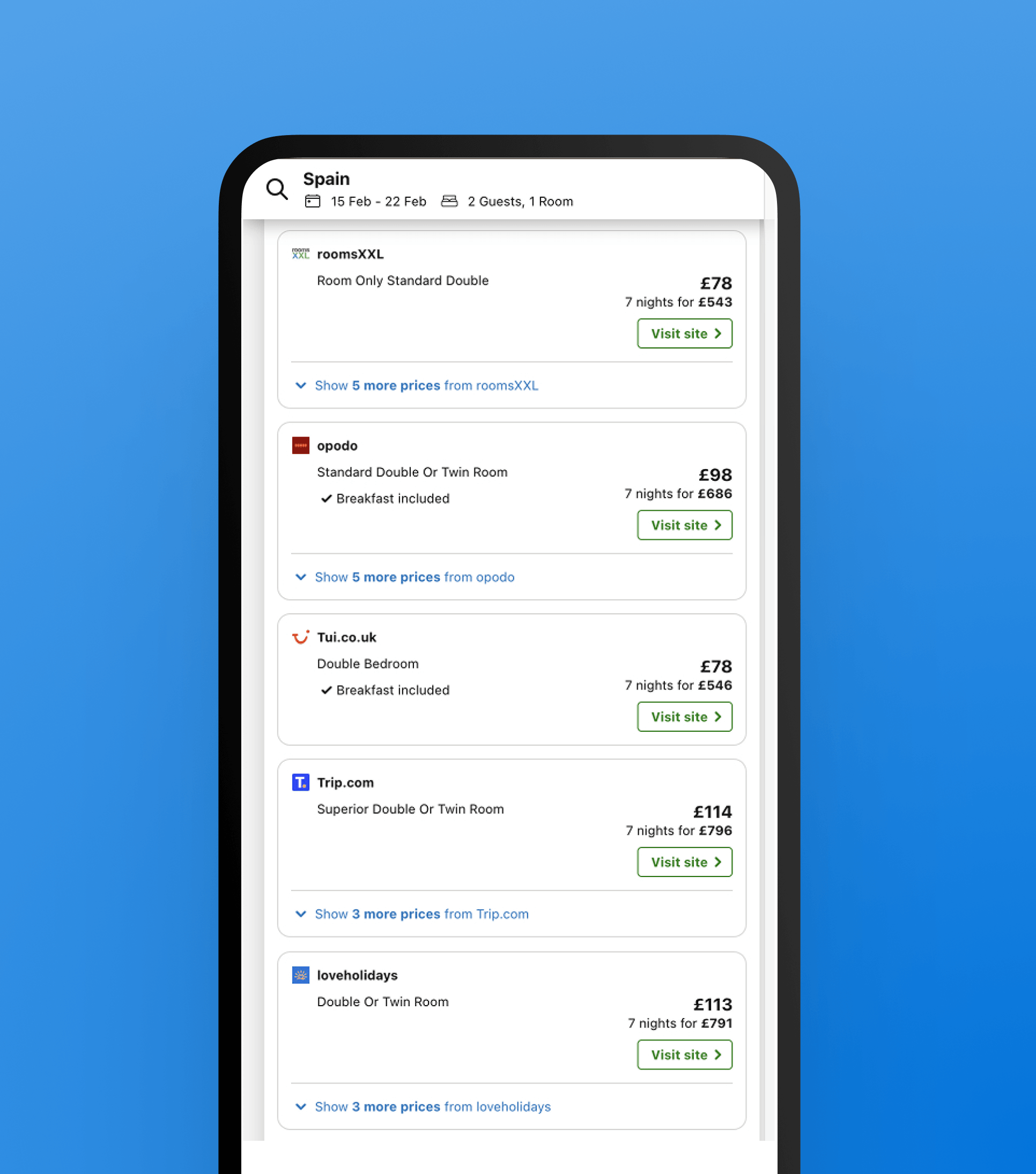
Screenshot from Triavgo
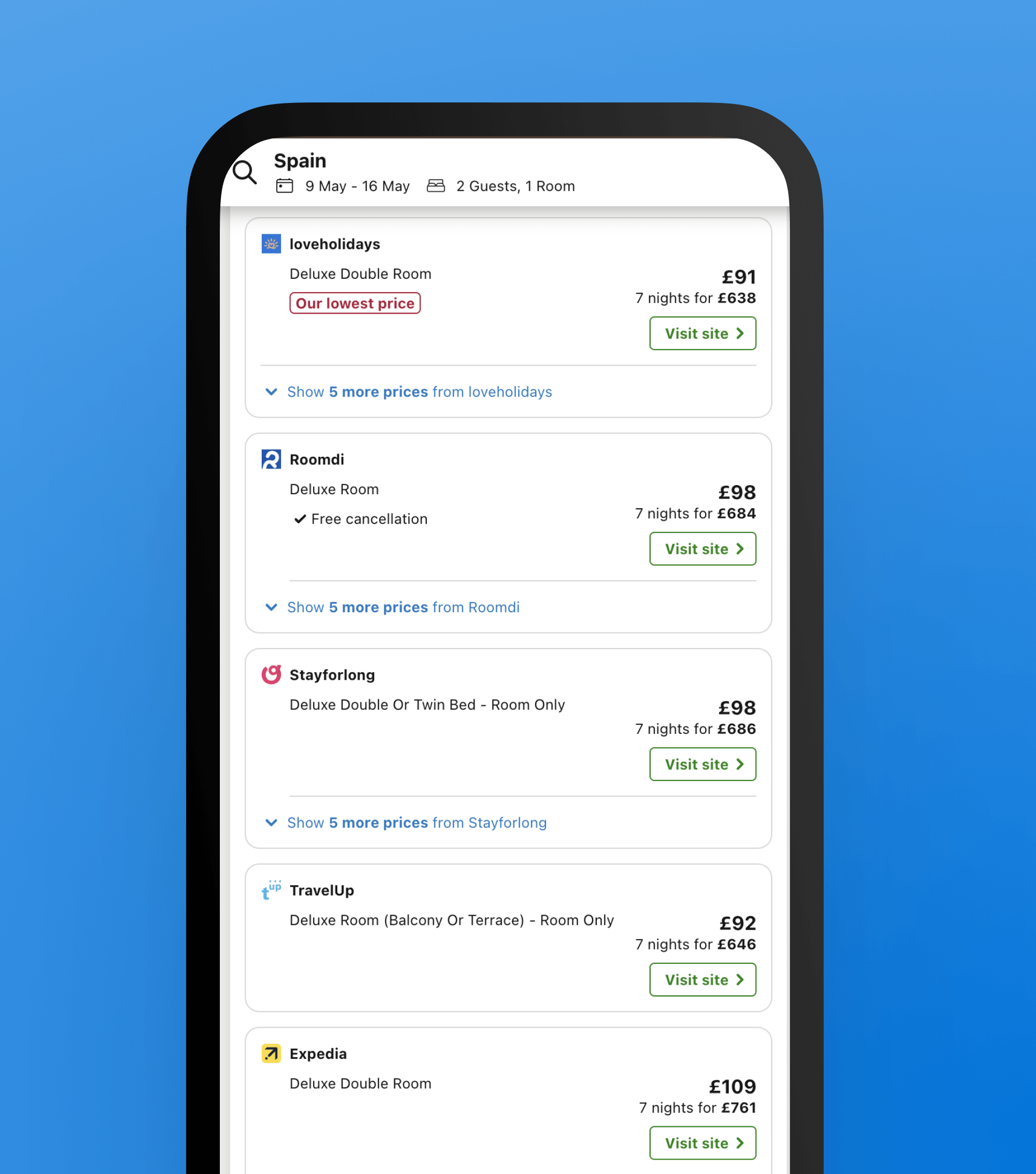
Screenshot from Triavgo
COMMERCIAL OPTIMISATION
Dynamic pricing by acquisition channel
Rather than lowering hotel prices for everyone, we used our existing discount logic to target customers arriving through metasearch.
Discounts could be applied to specific hotels and channels, allowing us to compete more effectively where needed.
This improved our position in metasearch without reducing margins across our existing package holiday business.
Hotel only brought customers in. Packages made the model more valuable.
Package customers had an 80% attachment rate for ancillary products, many carrying high margins. By converting hotel only customers into package buyers, we could offset the cost of competitive hotel pricing while increasing the overall value of each customer.
This created a simple growth model: use hotel only to acquire new customers, then create opportunities to add flights and other products.
USER RESEARCH
Understanding the opportunity
We conducted 10 unmoderated user interviews with customers familiar with OTAs to understand how they responded to adding flights to a hotel booking. The research uncovered a clear problem: customers saw value in booking a package, but many didn’t realise it was an option.
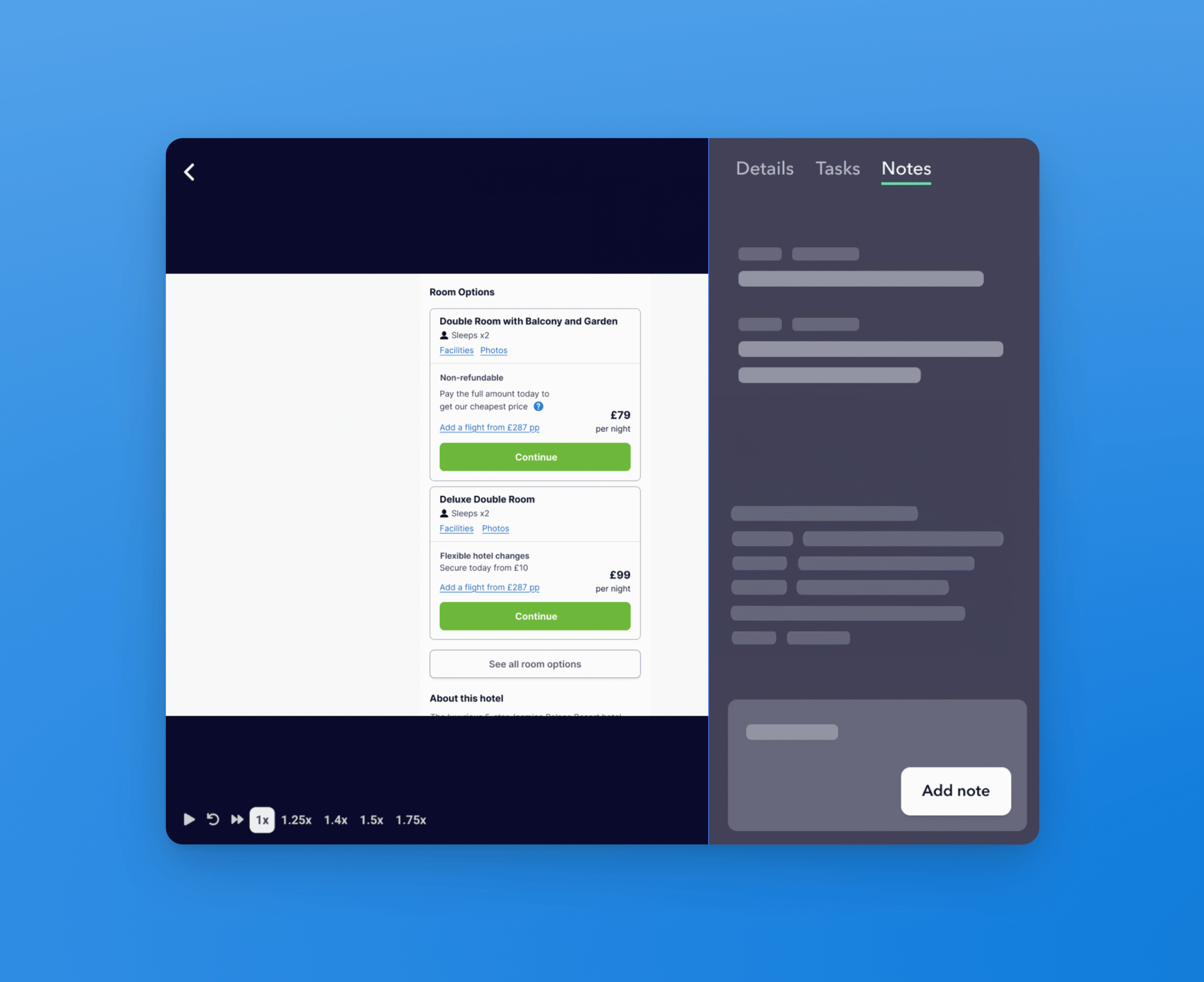
Key Findings
Initially, customers often overlooked the option to add flights and didn’t understand the benefits of booking everything together.
Once the package benefits were made clear, the proposition became much more compelling:
• ATOL protection
• Easier management of the whole trip
• Simpler cancellations and changes
• Competitive flight prices
• The ability to mix airlines to find better value
User testing quotes
Making the package impossible to miss
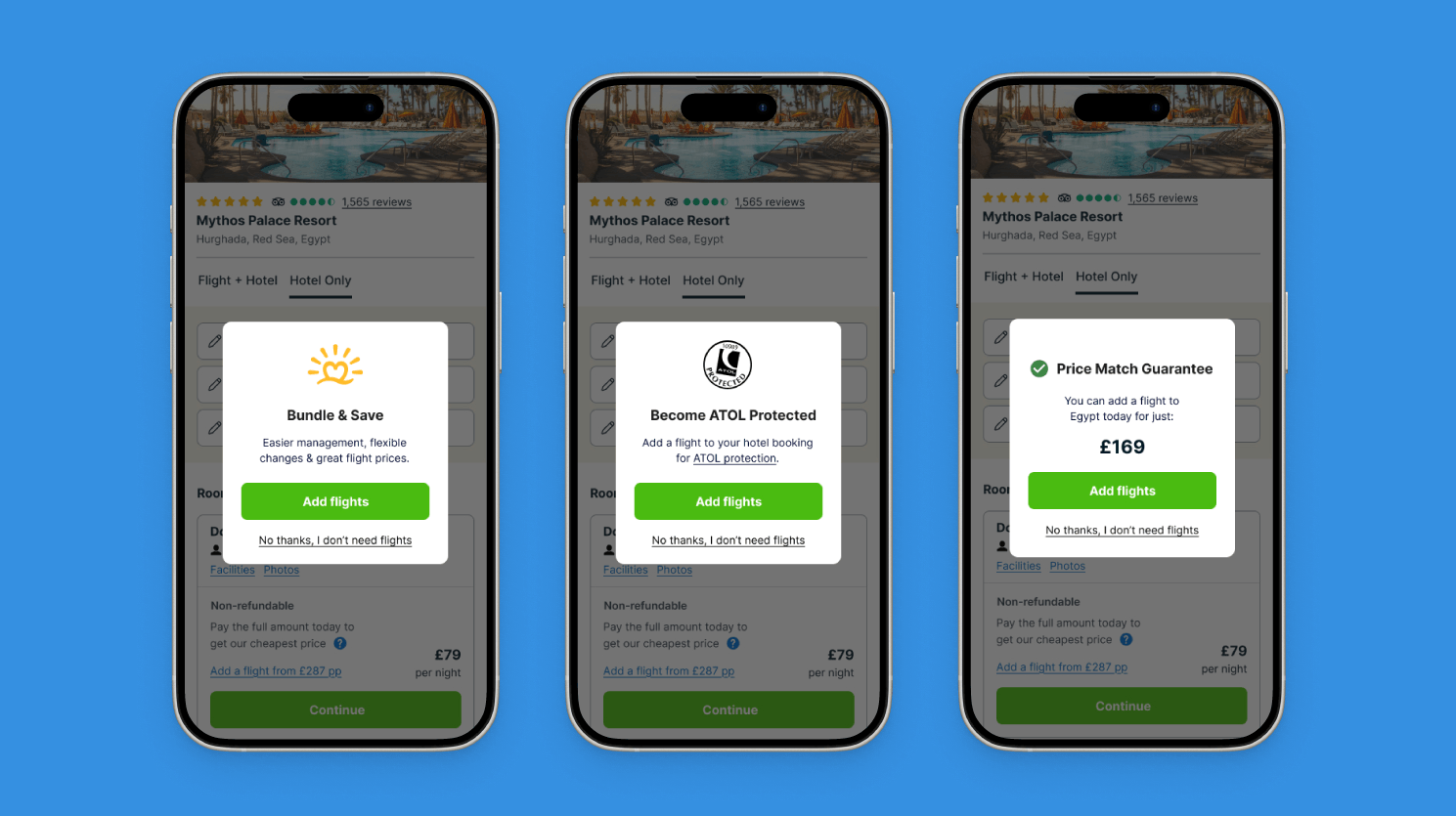
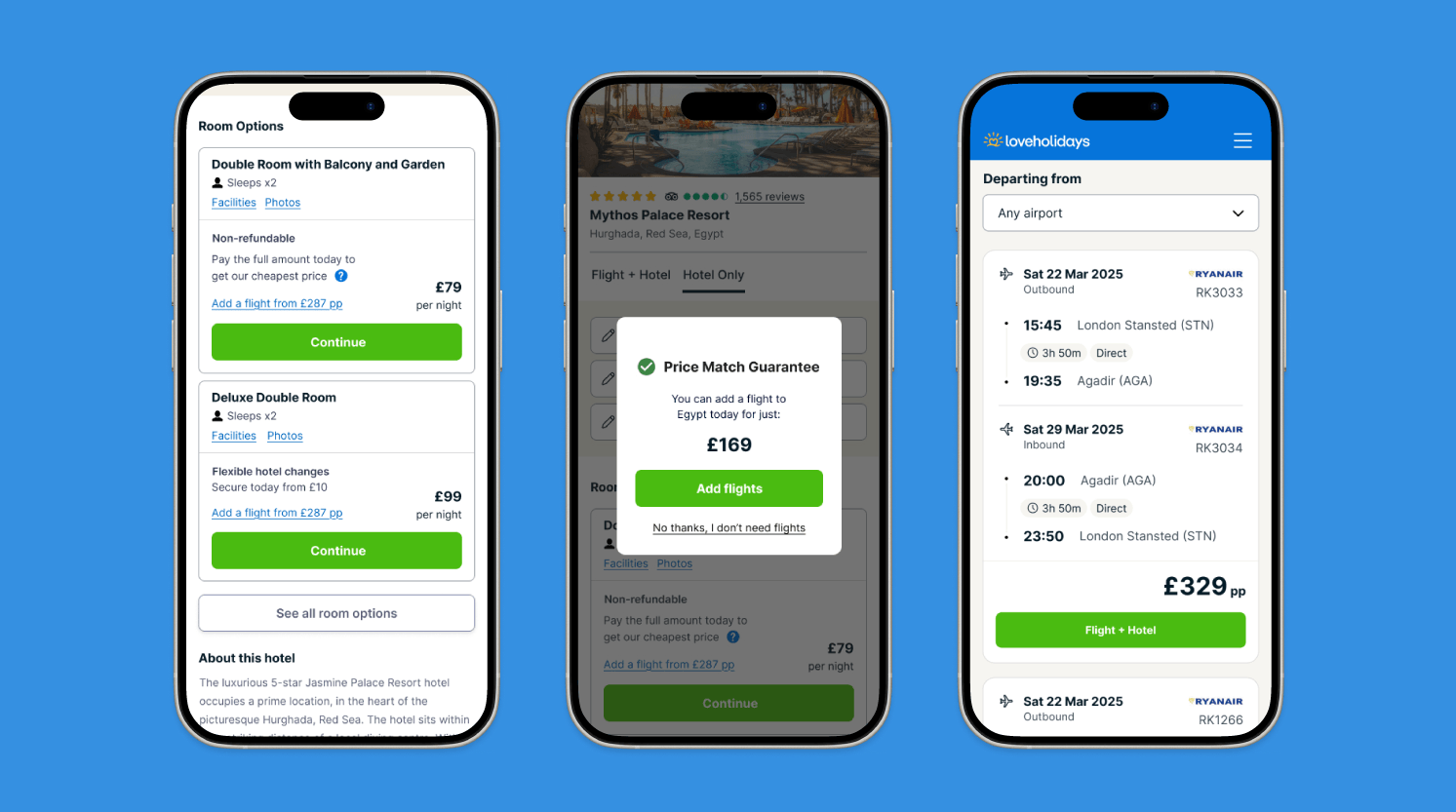
Research showed customers valued the benefits of a package once they understood them. The problem was that many were simply overlooking the option. So we took a deliberately bold approach. When customers continued with a hotel only booking, we introduced a prominent pop up encouraging them to add flights.
We tested three different messages based on our research:
- Bundle & Save focused on convenience, flexibility and value
- Become ATOL Protected highlighted the added protection of booking flights and hotel together.
- Price Match Guarantee reassured customers they would get the lowest flight price.
The aim was to make the package proposition unmissable and learn which benefit was most effective at persuading hotel only customers to add flights. We decided to try a aggressive approach that was undeniably visible to two reasons.
- We wanted to make sure all users seen our test variant meaning we would see results faster.
- We wanted to test the proposition and made sure it was that message that was being tested.
With that in mind we went for a modal that would pop up and block users. We had seen success previously with this tactic on luggage, we viewed this as a helpful reminder rather than an interruption. We were confident that once users were aware & understood the value proposition, a large percentage would take advantage of it.
The result
Making the upsell unmissable increased package conversion by 18%
The test validated the core hypothesis. Making the option to add flights much more prominent encouraged significantly more hotel only customers to move into a package holiday. Package was a much larger margin product given 80% users would attach high margin ancillary products, this would results in millions being added to our bottom line.
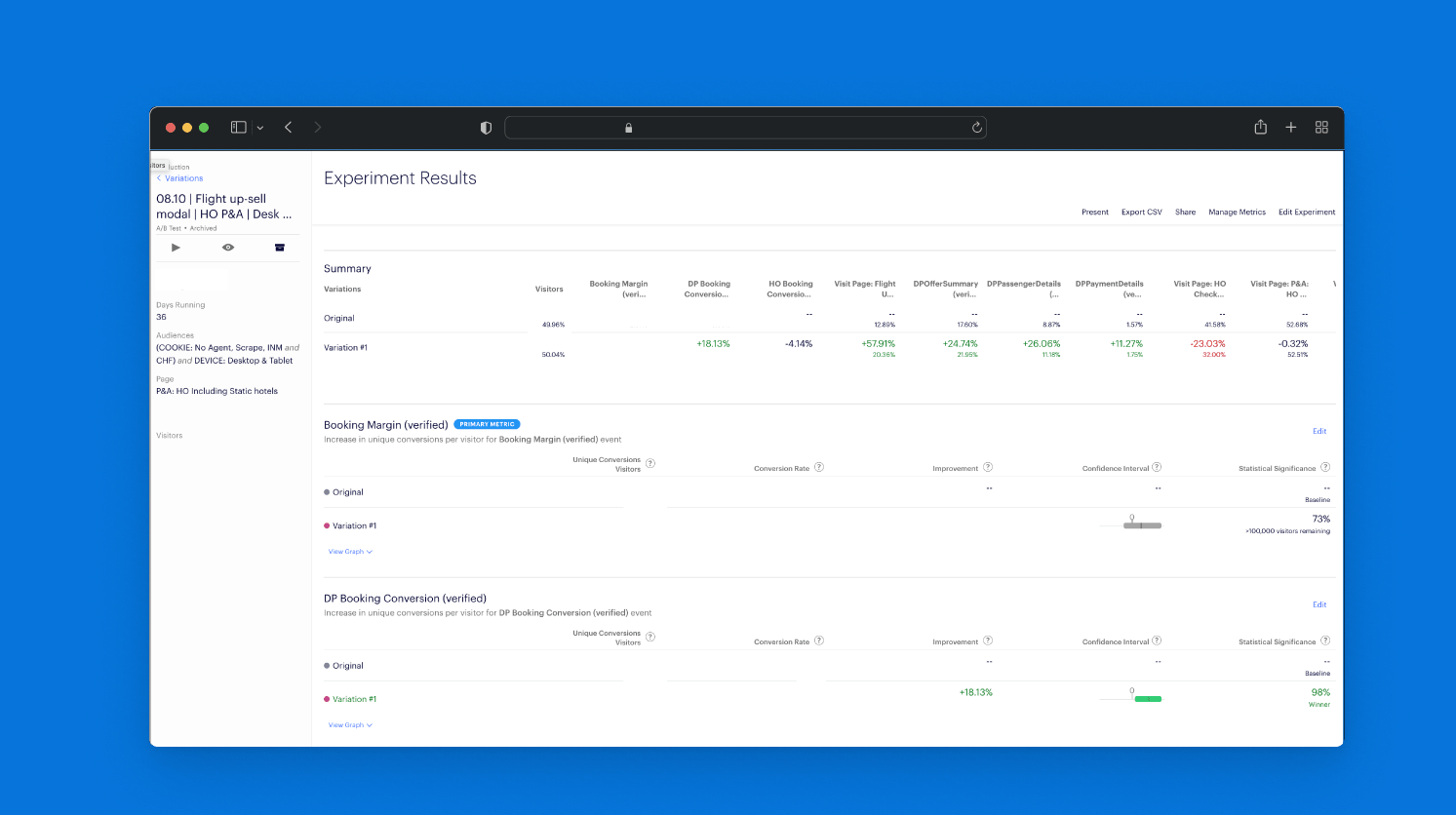
Experiment results
+18%
Package booking conversion
98%
98% Statistical significance
The winning approach gave customers a clear reason to add flights at the point of booking, turning hotel only from a standalone product into an effective route into the higher value package journey.
Did we change anything?
58%
Increase in users viewing flight options
25%
Increase in user reaching the Dynamic package (holidays) checkout.
18%
Uplift in flight and hotel package conversion
80%
Attachment rate for ancillaries
500+
Increase in user reaching the Dynamic package (holidays) checkout.
3rd
Became Trivago’s 3rd largest UK partner
A fast track to international expansion
Hotel only gave us a lower risk, faster way to test new international markets. We launched in France, Sweden, Denmark, Ireland and the US, using the product to validate demand before investing in the full package holiday experience.
Where we saw strong potential, we expanded the proposition and built out the full product.
Today, loveholidays is Ireland’s largest OTA, with the model also supporting continued expansion across European markets including Germany.
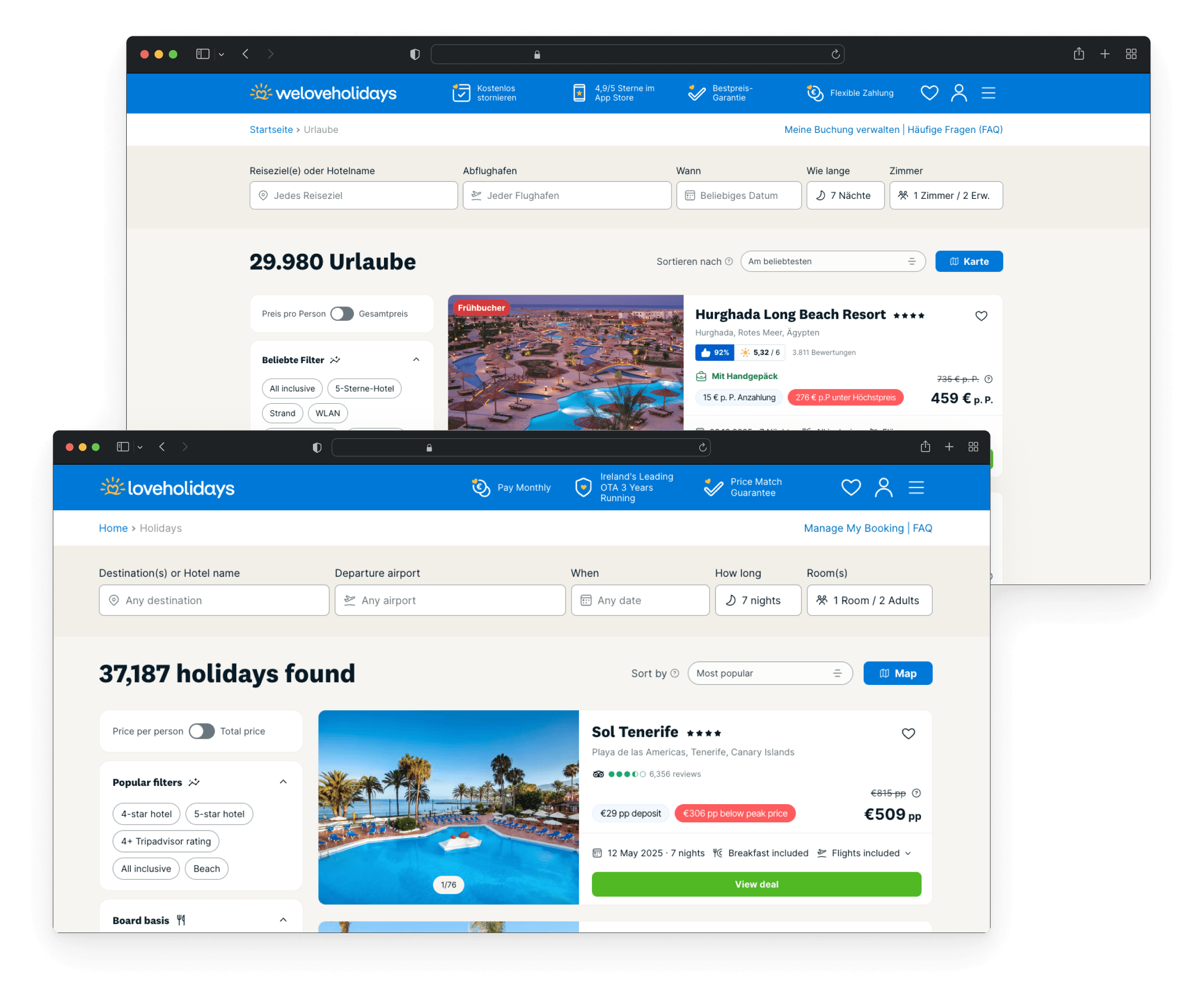
From package holidays to a broader travel platform
Hotel only opened loveholidays to a new group of customers and proved the business could successfully expand beyond its original package holiday model.
What began as a focused MVP grew from 30 to more than 500 bookings a day, while creating a valuable new route for customers into the higher value package holiday product.
The model also gave us a faster, lower cost way to enter new markets. It became the foundation for our launch in Ireland, where loveholidays grew to become the largest OTA within 18 months.
500+ bookings a day
Scaled from around 30 daily bookings within five months.
New acquisition channel
Hotel only created a new route into the core package holiday product.
Foundation for expansion
Created a faster route into new markets across Ireland and Europe.